3D Paper Boat: Integrating a Minimalist Classic into Modern Creative Workflows
The intersection of nostalgia and modern manufacturing offers unique opportunities for creators, educators, and small business owners. The 3D Paper Boat represents more than just a digital file; it is a bridge between the tactile memory of childhood origami and the durability of additive manufacturing. For professionals managing creative projects or looking for symbolic assets, this model provides a streamlined solution that fits seamlessly into various production pipelines. Unlike complex mechanical parts that require extensive calibration, this design prioritizes aesthetic clarity and print reliability, making it an ideal candidate for both rapid prototyping and final product deployment.
Understanding the Design Philosophy and Technical Specifications
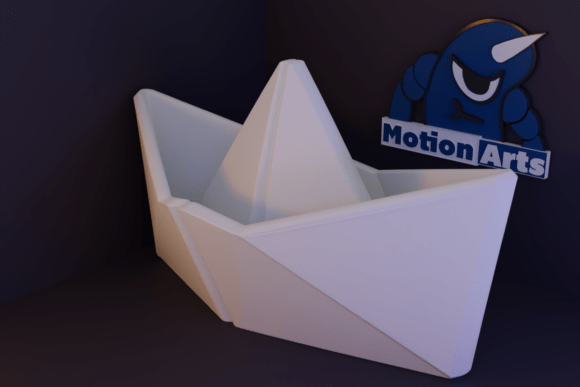
At its core, the 3D Paper Boat is a reinterpretation of a universal symbol. The design captures the characteristic folded look of traditional paper origami, utilizing clean lines and simple volumes to evoke lightness. However, by translating this into a 3D printable format, the object gains structural resistance and permanence. This duality is crucial for users who need objects that convey fragility or simplicity but must withstand handling, shipping, or long-term display.
From a technical standpoint, the model is designed with printability in mind. It features a closed and balanced geometry, which simplifies the slicing process. While support structures are needed to maintain the integrity of the overhanging "sails" and hull details, the requirement is minimal compared to intricate organic models. This balance makes it accessible for beginners while still offering enough detail to satisfy quality control standards for professional outputs. The file is typically distributed in STL format, ensuring compatibility with most slicer software and FDM printers on the market.
Strategic Applications in Professional and Educational Contexts
Integrating the 3D Paper Boat into your workflow depends largely on your end goal. Here is how different professionals can leverage this asset effectively:
- Educators and Trainers: Use the model as a tangible reward system or a teaching aid for geometry and spatial reasoning. Its simple form allows students to understand layer adhesion and support removal without the frustration of failed prints.
- Marketers and Brand Strategists: The boat serves as a powerful metaphor for journey, navigation, and new beginnings. It can be customized with brand colors or used as a physical touchpoint in campaign launches, symbolizing a company’s direction or stability.
- Interior Designers and Decorators: For minimalist spaces, these boats offer sculptural value without visual clutter. They can be printed in matte finishes to mimic ceramic or plaster, providing high-end aesthetics at a fraction of the cost.
- Event Planners: As souvenirs or table settings, they provide a personalized, durable alternative to paper goods. They can be mass-produced efficiently for weddings, corporate retreats, or conferences.
Pre-Production Planning and Material Selection
Successful implementation begins before the printer starts. Choosing the right material is critical to achieving the desired effect. For a authentic "paper" look, consider using PLA in white, cream, or pastel shades. Matte PLA filaments are particularly effective as they reduce layer visibility, enhancing the illusion of folded paper. If durability is a priority for items that will be handled frequently, PETG offers greater impact resistance, though it may require finer tuning of retraction settings to avoid stringing on the sharp edges of the boat.
Orientation plays a significant role in the final quality. Printing the boat flat on its base ensures maximum stability and minimizes the risk of warping. However, this orientation will require support structures for the upper folds. Users should configure their slicer to generate tree supports or lightweight linear supports, which are easier to remove and leave fewer marks on the surface. A layer height of 0.15mm to 0.2mm strikes a good balance between print speed and surface smoothness, ensuring the "folded" lines remain crisp without excessive printing time.
Workflow Integration and Post-Processing Techniques
Once the print is complete, the post-processing phase defines the professional quality of the output. Removing supports from a 3D Paper Boat requires patience. Use flush cutters to trim the main support structures close to the model, then carefully sand the contact points with fine-grit sandpaper (400–600 grit). This step is essential for maintaining the clean, minimalist aesthetic that defines the design.
For those looking to elevate the piece further, painting or sealing can add significant value. A primer filler spray can help hide any minor layer lines, creating a seamless surface that mimics injection-molded plastic or ceramic. Acrylic paints allow for custom color schemes, enabling creators to match specific brand identities or thematic requirements. Alternatively, a clear matte sealant can protect the print from dust and UV degradation, ensuring longevity for outdoor displays or high-traffic areas.
Scaling Production and Quality Control
For small business owners or educators needing multiple units, batch printing is a viable strategy. The compact footprint of the 3D Paper Boat allows for multiple copies to be printed on a single build plate. However, spacing is crucial to ensure adequate cooling and prevent heat creep, which can deform the delicate upper sections. Arranging the boats in a grid pattern with at least 10mm of separation helps maintain consistent quality across all units.
Quality control should focus on consistency. Check each boat for uniform wall thickness and ensure that the "folds" align symmetrically. Any deviation may indicate bed leveling issues or inconsistent extrusion. Establishing a standard operating procedure for slicing settings—such as infill percentage (15–20% is usually sufficient for decorative pieces) and wall count—ensures that every batch meets the same high standard. This consistency is vital when delivering products to clients or using them as part of a cohesive educational kit.
Long-Term Value and Sustainable Practices
Beyond immediate utility, the 3D Paper Boat offers long-term value through its versatility and sustainability. As a digital asset, it eliminates the need for physical inventory storage until production is required, reducing waste and overhead costs. Furthermore, using biodegradable PLA filaments aligns with eco-friendly initiatives, appealing to environmentally conscious consumers and institutions.
The model also serves as an excellent entry point for those new to 3D printing. Its forgiving geometry allows beginners to learn troubleshooting skills—such as adjusting support density and improving bed adhesion—without the high stakes of functional mechanical parts. This learning curve contributes to skill development, empowering users to tackle more complex projects in the future.
Conclusion
The 3D Paper Boat is a testament to how simple designs can have profound practical applications. By combining nostalgic appeal with modern manufacturing capabilities, it offers a versatile tool for decorators, educators, marketers, and makers. Whether used as a symbolic gesture, a decorative element, or a teaching aid, its integration into your workflow is straightforward and rewarding. With careful attention to material selection, slicing parameters, and post-processing, this model can transform from a basic STL file into a high-quality, meaningful object that resonates with audiences across various contexts.