Creating a Festive Atmosphere: A Practical Guide to 3D Christmas Market Booth Laser Cut CNC Designs
The holiday season brings a unique demand for visual storytelling, whether you are a small business owner setting up a seasonal stall or a hobbyist looking to create intricate home décor. Among the various methods available for crafting festive structures, the 3D Christmas Market Booth Laser Cut CNC approach has gained significant traction. This technique combines traditional woodworking aesthetics with modern digital precision, allowing creators to produce detailed, three-dimensional scenes that capture the charm of European winter markets.
Understanding what this specific design category entails is crucial before investing time and materials. Unlike flat ornaments or simple two-dimensional cutouts, these designs are engineered to assemble into立体 structures. They often feature layered roofs, textured walls, and miniature details that mimic real architectural elements. The appeal lies in the balance between complexity and achievability; while the final product looks hand-carved, the process relies on computer-controlled accuracy.
Distinct Features of Laser-Cut 3D Structures
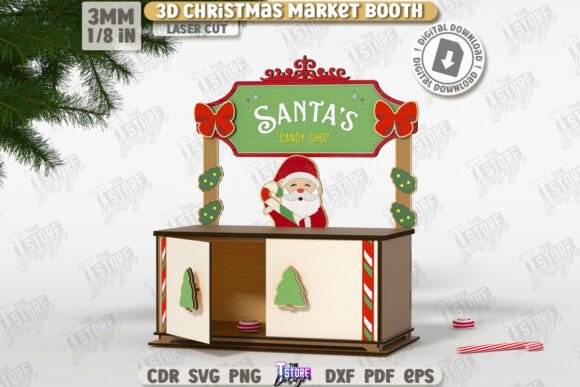
What sets a 3D Christmas Market Booth Laser Cut CNC project apart from standard laser cutting files is the emphasis on assembly and depth. These files are not merely decorative patterns but functional blueprints for construction. The design typically includes interlocking tabs, slots, and layered components that fit together without the need for excessive adhesives, although glue is often recommended for stability.
A critical aspect of working with these files is understanding the vector instructions embedded within them. Professional-grade files, such as those provided in comprehensive digital packages, use color-coding to distinguish between operations. For instance, RED lines usually indicate where the laser should cut through the material completely, while BLACK lines signal areas for engraving or etching surface details. This distinction is vital for achieving the desired aesthetic contrast between the structural edges and the decorative textures.
Furthermore, the versatility of these designs allows for customization. Users can adjust the scale to create everything from tabletop centerpieces to larger display units. However, scaling requires careful consideration of material thickness. A design optimized for 3mm plywood may not assemble correctly if scaled up significantly without adjusting tab sizes, highlighting the importance of using files that are tested and verified for specific material constraints.
Comparing Digital Formats and Software Compatibility
When sourcing a 3D Christmas Market Booth Laser Cut CNC file, the format in which it is delivered can significantly impact your workflow. Most reputable designers provide a zip archive containing multiple file types, including SVG, EPS, PNG, PDF, and DXF. Each format serves a different purpose and interacts differently with various laser control software.
SVG (Scalable Vector Graphics) files are widely supported and easy to edit in many graphic design programs. However, they can sometimes present challenges in specialized laser software. For example, users of Lightburn, a popular interface for laser cutters, may encounter issues where SVG files distort dimensions upon import. This distortion can lead to parts that do not fit together properly, ruining the structural integrity of the 3D booth. In such cases, it is advisable to use the DXF (Drawing Exchange Format) file instead. DXF files tend to maintain dimensional accuracy more reliably across different platforms, ensuring that the precise measurements intended by the designer are preserved.
EPS and PDF formats are also useful, particularly for users who prefer Adobe Illustrator or CorelDRAW for pre-processing their files. These formats allow for easy manipulation of layers and colors before sending the job to the laser cutter. Meanwhile, PNG files serve primarily as visual references or for engraving raster images, though they are not suitable for cutting paths due to their pixel-based nature.
If you find that the provided formats do not match your software requirements, many designers are open to communication. Reaching out to request a different file type or a specific color variation for PNG previews can save considerable time and frustration. This level of support is often a hallmark of high-quality digital products, distinguishing them from generic, unsupported downloads.
Material Considerations and Execution Tradeoffs
While the digital file provides the roadmap, the physical outcome depends heavily on material selection. Plywood is the most common choice for 3D Christmas Market Booth Laser Cut CNC projects due to its strength, affordability, and attractive layered edge appearance. Birch plywood, in particular, offers a smooth surface that engraves well and cuts cleanly with minimal charring.
However, there are tradeoffs to consider. Thicker materials provide more stability and a more substantial feel but require more powerful lasers and longer cutting times. Conversely, thinner materials cut faster and are less expensive but may result in a fragile structure that requires careful handling. Additionally, the number of layers in the design affects the overall depth and realism. More layers create a richer, more detailed look but increase the complexity of assembly and the amount of material needed.
Another factor is the finish. Raw wood has a rustic charm that fits the Christmas market theme perfectly, but it may require sealing or painting for durability, especially if the item will be handled frequently. Engraved details, guided by the black lines in the file, add texture and visual interest without the need for paint, preserving the natural wood grain.
Evaluating Alternatives and Best-Fit Scenarios
Is a 3D Christmas Market Booth Laser Cut CNC design the right choice for your project? It depends on your goals, resources, and skill level. If you are looking for quick, mass-produced decorations, injection-molded plastic or printed paper crafts might be more efficient. These alternatives require no assembly and are generally cheaper per unit, though they lack the artisanal quality and customizability of laser-cut wood.
For those interested in hand-carving or traditional woodworking, the laser-cut approach offers a middle ground. It eliminates the need for advanced carpentry skills while still resulting in a tangible, high-quality wooden object. This makes it ideal for educators, small business owners, and hobbyists who want to produce professional-looking items without years of training.
However, if you do not have access to a laser cutter, this option may not be feasible unless you use a local makerspace or online cutting service. In such cases, the cost of outsourcing the cutting must be factored into the overall budget. Additionally, the assembly process, while straightforward, requires patience and attention to detail. Rushing the assembly can lead to misaligned parts and a compromised structure.
Making an Informed Decision
Choosing to work with a 3D Christmas Market Booth Laser Cut CNC file is a decision that balances creativity with technical precision. It offers a rewarding experience for those who enjoy the process of building and customizing. The ability to tweak colors, sizes, and finishes allows for a high degree of personalization, making each piece unique.
Before starting, ensure your machine is compatible with the file formats provided. Test cuts on scrap material are recommended to verify power and speed settings, especially when dealing with intricate details. Remember that the red lines are for cutting and black lines for engraving; mixing these up can result in wasted material and failed projects.
Ultimately, these designs provide a versatile foundation for holiday décor. Whether used as a standalone centerpiece, part of a larger village display, or a packaging solution like a mini candy box, they bring a touch of warmth and craftsmanship to the season. By understanding the technical requirements and comparing them against your specific needs, you can determine if this approach aligns with your creative vision.
For those interested in exploring more options, staying connected with designers can provide access to future releases and updated files. Many creators appreciate feedback and questions, so do not hesitate to reach out if you need assistance with file conversions or sizing adjustments. This collaborative approach ensures that you get the most out of your digital purchases and enhances your overall crafting experience.