Expressing Identity: A Practical Guide to Italian Heritage Sublimation Design
For many individuals with roots in Italy, heritage is not merely a historical footnote; it is a living, breathing part of their daily identity. Whether through food, language, or family traditions, the connection remains strong. In the world of custom merchandise and digital crafting, Italian Heritage Sublimation Design has emerged as a popular method for translating this cultural pride into tangible items. Unlike generic store-bought souvenirs, these designs allow for a high degree of personalization and quality control, appealing to both hobbyists and small business owners.
This article explores what makes this specific design approach distinct, how it compares to other customization methods, and what factors you should consider before integrating it into your projects. By understanding the technical specifications and aesthetic nuances, you can make an informed decision about whether this digital asset fits your creative needs.
Understanding the Design Aesthetic and Technical Specifications
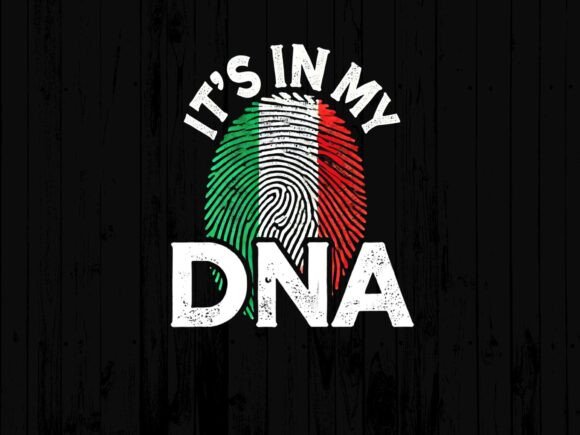
The core appeal of this particular Italian Heritage Sublimation Design lies in its symbolic imagery. It features a vibrant fingerprint rendered in the colors of the Italian flag—green, white, and red—accompanied by the phrase "It’s In My DNA." This visual metaphor effectively communicates that Italian culture is an intrinsic part of one’s identity, rather than just a superficial interest. The design is not static; it is engineered for versatility across various mediums.
From a technical standpoint, the quality of a sublimation print depends heavily on the source file. This design is provided as a digital download with a resolution of 4500 by 5400 pixels at 300 dots per inch (dpi). For those unfamiliar with print standards, 300 dpi is the industry benchmark for high-quality physical prints. Lower resolutions often result in pixelation or blurriness when scaled up, particularly on larger items like posters or full-wrap mugs. The transparent background included in the PNG file is another critical feature, allowing the design to blend seamlessly onto colored fabrics or ceramics without an unsightly white box surrounding the image.
Sublimation vs. Other Printing Methods
When deciding how to apply a design to merchandise, it is essential to compare sublimation with alternative methods such as heat transfer vinyl (HTV), direct-to-garment (DTG) printing, and screen printing. Each method has distinct tradeoffs regarding durability, cost, and visual outcome.
- Sublimation: This process turns solid ink into gas using heat, which then bonds with polyester fibers or polymer-coated surfaces. The result is a print that becomes part of the material itself. It does not crack, peel, or fade easily. However, it works best on light-colored, synthetic materials. The Italian Heritage Sublimation Design is optimized for this process, ensuring the vibrant flag colors remain bright after multiple washes.
- Heat Transfer Vinyl (HTV): HTV involves cutting shapes from colored vinyl and pressing them onto fabric. While effective for simple text or solid shapes, it struggles with complex gradients or detailed images like a multi-colored fingerprint. Additionally, vinyl sits on top of the fabric, which can feel stiff and may peel over time.
- Direct-to-Garment (DTG): DTG printers work similarly to paper inkjet printers but on fabric. They handle complex designs well and work on cotton. However, the equipment is expensive, making it less accessible for DIY enthusiasts. Sublimation offers a more cost-effective entry point for home creators.
If your goal is to create durable, all-over prints on items like mugs, mousepads, or polyester t-shirts, sublimation is often the superior choice. If you are working with 100% cotton dark fabrics, however, you may need to explore DTG or specialized transfer papers instead.
Evaluating File Formats for Different Projects
A significant advantage of purchasing comprehensive digital design packs is the inclusion of multiple file formats. This Italian Heritage Sublimation Design is available in SVG, DXF, JPEG, and PNG. Understanding when to use each format can significantly impact the quality of your final product.
SVG and DXF for Cutting Machines
The SVG (Scalable Vector Graphics) format is ideal for users with cutting machines like Cricut or Silhouette. Because vectors are resolution-independent, they can be scaled to any size without losing quality. This is particularly useful if you want to isolate specific elements of the design, such as just the text "It’s In My DNA," to create a layered look with vinyl. Similarly, the DXF (Drawing Exchange Format) is compatible with older CAD software and certain cutting programs, providing flexibility for users with different technical setups.
PNG and JPEG for Direct Printing
For sublimation printing, the PNG (Portable Network Graphics) file is the primary asset. Its support for transparency allows the design to sit cleanly on the substrate. The JPEG (Joint Photographic Experts Group) format, while offering high-quality compression, does not support transparency. It is better suited for web previews or scenarios where a solid background is acceptable. Always prioritize the PNG file for actual sublimation transfers to avoid white edges around your design.
Best-Fit Applications and Limitations
Knowing where this design excels helps manage expectations. The vibrant green, white, and red colors of the Italian flag pop exceptionally well on white or light-colored polyester blends. Common applications include:
- Apparel: Performance shirts, tank tops, and aprons made from high-polyester content fabrics.
- Hard Goods: Ceramic mugs, metal water bottles, and coasters that have been polymer-coated for sublimation.
- Home Decor: Throw pillows with polyester covers and wall art prints.
However, there are limitations. Sublimation ink is translucent, meaning it cannot print white. If you attempt to sublimate this design onto a black shirt, the colors will be muted and barely visible. In such cases, you would need to use a white underbase transfer or switch to a different printing method. Additionally, the design’s intricate fingerprint detail requires precise heat press settings. Incorrect temperature or pressure can lead to ghosting or uneven color distribution.
Making the Right Choice for Your Project
Choosing the right design resource involves balancing ease of use with professional results. The Italian Heritage Sublimation Design is an excellent option for those who already own a sublimation printer and heat press. It eliminates the time-consuming process of creating complex vector art from scratch while providing a high-resolution, ready-to-print file. The inclusion of multiple formats adds value, allowing the same purchase to serve both printing and cutting needs.
Conversely, if you do not have sublimation equipment, the upfront investment may not be justified for a single project. In that scenario, using a local print-on-demand service that accepts high-resolution PNGs might be a more practical alternative. You can upload the provided PNG file to these services, though you must ensure they support full-color sublimation or DTG printing to maintain the design’s integrity.
Ultimately, this design serves as a bridge between cultural pride and modern craftsmanship. It allows creators to produce meaningful, high-quality items that resonate emotionally with the recipient. By understanding the technical requirements and comparing them against your available tools and materials, you can determine if this digital asset aligns with your creative goals. Whether for a family reunion, a cultural festival, or a personal keepsake, the key lies in matching the right medium to the message.