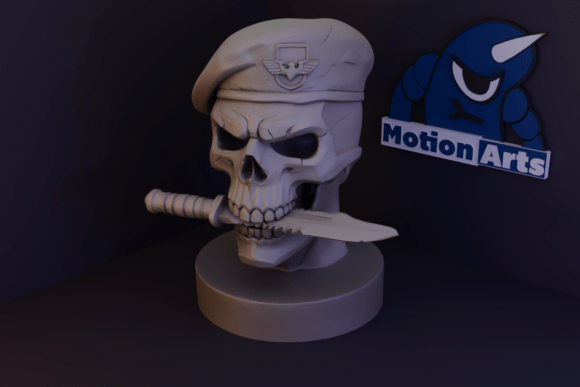
Military Skull with Knife 3D Model
Adding a distinct visual anchor to a creative project or physical space often requires more than just generic decor. It demands a piece that communicates attitude, resilience, and a specific thematic intensity. The Military Skull with Knife in Mouth 3D Model for 3D Printing serves precisely this purpose. It is not merely a decorative object; it is a statement piece that blends the timeless symbolism of the skull with aggressive military aesthetics. For creators, hobbyists, and collectors, this model offers a unique opportunity to produce high-impact art that is both structurally sound and visually striking.
Whether you are designing a tabletop gaming terrain, curating a tactical-themed display, or simply exploring the capabilities of your 3D printer, understanding the design philosophy behind this model can significantly enhance your final result. This article explores why this specific design stands out in a crowded marketplace of digital files and how it can be leveraged for maximum aesthetic and practical benefit.
Design Integrity Meets Printability
One of the most common frustrations for 3D printing enthusiasts is finding models that look impressive on screen but fail during the printing process. Fragile overhangs, thin walls, and poorly integrated parts often lead to failed prints or pieces that break immediately upon removal from the build plate. The Military Skull with Knife in Mouth – 3D Model for Printing was developed with a keen awareness of these technical constraints.
The design features well-closed volumes and parts that are integrated into the whole structure. This approach avoids the fragility often associated with detailed skull models. By ensuring that the knife and other military elements are not delicate appendages but rather robust components of the overall mesh, the model maintains its structural integrity. This is particularly beneficial for beginners who may not yet have mastered the nuances of support placement and print orientation. The balanced stylization ensures that the aggressive expression and intricate details do not compromise the physical stability of the print.
For users, this means less time troubleshooting failed prints and more time enjoying the final product. It simplifies the decision-making process regarding print settings, as the model is forgiving enough to handle standard layer heights and infill densities without losing its defining characteristics.
Symbolism and Visual Impact
Beyond technical ease, the visual language of this model is its strongest asset. The skull has long been a symbol of mortality, danger, and rebellion. When combined with military elements and a knife held firmly in the mouth, the imagery shifts to convey strength, fighting spirit, and unyielding resilience. This is not a passive decoration; it is an active representation of toughness.
This intense attitude makes the model ideal for several specific use cases:
- Tactical and Military Decor: For enthusiasts of military history, airsoft, or tactical gear, this piece serves as a powerful centerpiece. It complements other memorabilia without appearing out of place, adding a layer of gritty realism to the display.
- Tabletop Gaming and Dioramas: Game masters and hobby painters can use this model to create impactful scenery for war games or post-apocalyptic campaigns. Its bold silhouette reads well from a distance, making it an excellent terrain feature or objective marker.
- Artistic Projects: Artists exploring themes of conflict, survival, or human endurance can use this model as a base for mixed-media projects. The stylized design provides a solid foundation for custom paint jobs, weathering effects, and additional modifications.
The key to leveraging this symbolism lies in presentation. Because the design is stylized rather than hyper-realistic, it allows for creative interpretation. A matte black finish can emphasize the shadowy, ominous aspects, while a metallic bronze or steel paint job can highlight the industrial, military feel. The choice of finish directly influences the narrative the piece tells within your space.
Accessibility for Creators of All Levels
A significant advantage of the Military Skull with Knife in Mouth 3D Model for 3D Printing is its accessibility. Labeled as beginner-level, it lowers the barrier to entry for those new to additive manufacturing. However, this does not mean it lacks sophistication. Instead, it reflects a thoughtful design process that prioritizes user experience.
For beginners, the primary benefit is confidence. Successfully printing a complex-looking object builds morale and encourages further experimentation with 3D printing. Since the model requires supports but is designed to minimize difficult-to-remove contact points, it serves as an excellent learning tool for understanding support structures. Users can practice optimizing support density and interface layers without the risk of ruining a highly delicate model.
For experienced makers, the model offers a quick, reliable print that can be completed in a reasonable timeframe. This efficiency is valuable for those who need to produce multiple copies for events, sales, or gifts. The consistent quality of the output ensures that each piece meets a high standard, reducing the need for extensive post-processing or repair.
Practical Considerations for Optimal Results
To get the most out of this STL file, users should consider a few practical recommendations. First, while the model is robust, the orientation on the print bed matters. Printing the skull upright or at a slight angle can help reduce the amount of support material needed inside the cranial cavity and around the knife. Always check the slicer preview to ensure that the knife blade is adequately supported to prevent sagging.
Second, material choice plays a crucial role in the final appearance. PLA is sufficient for decorative purposes and offers ease of printing. However, for a more durable finish or if the piece will be handled frequently, PETG or ABS might be better options. These materials offer greater impact resistance, which aligns with the tough aesthetic of the model. If painting is intended, PLA’s smooth surface texture provides an excellent canvas for primers and acrylics.
It is also important to note that while the design is beginner-friendly, it still requires support material. Users should be prepared to spend time removing supports and sanding any minor artifacts. This post-processing step is essential for achieving the clean, professional look that the design intends. Rushing this stage can obscure the detailed expressions and military elements that define the piece.
Who Benefits Most from This Model?
This model is particularly well-suited for individuals who value both form and function in their creative endeavors. Small business owners who sell 3D printed goods can find a niche market for this item among military enthusiasts and fans of edgy decor. Its distinctive look helps it stand out in online marketplaces, where generic skulls are commonplace.
Educators and workshop leaders can also utilize this model to teach principles of design for manufacturability. It serves as a tangible example of how aesthetic goals can be balanced with engineering constraints. Students can analyze why certain features were thickened or integrated, gaining insights into the iterative process of 3D model development.
Ultimately, the Military Skull with Knife in Mouth – 3D Model for Printing is more than just a file to download. It is a tool for expression. It allows users to bring intensity and personality to their 3D universe, creating pieces that resonate with strength and character. By choosing a model that is both visually compelling and technically sound, creators can focus on what matters most: bringing their vision to life with precision and pride.
When selecting your next print, consider the message you want to convey. If you seek a piece that embodies resilience and commands attention, this military skull offers a perfect blend of symbolic power and printing reliability. It is a testament to the idea that even in digital creation, substance and style must go hand in hand.